Sharjah Translation Award Given to Brazilian Publisher
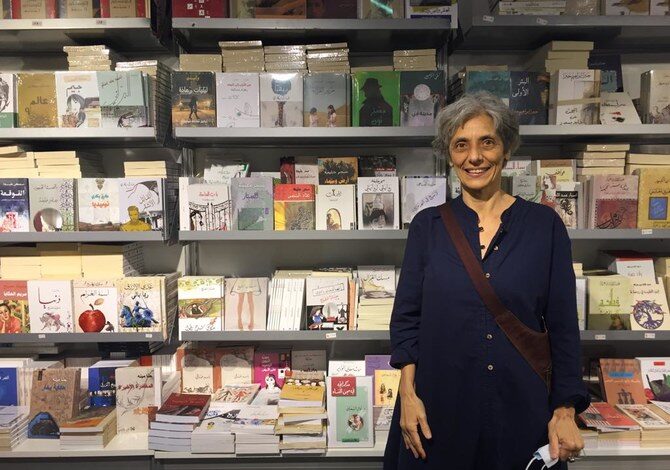
Tabla, a Brazilian publishing firm, earned this year’s Turjuman Award for best translations from the Arabic language at the Sharjah International Book Fair.
“Eleven Planets” by Palestine’s national poet Mahmoud Darwish was awarded the prize for Tabla’s Portuguese-language translation (1941-2008).
For the Sharjah Book Authority, “well-established foreign translations” capable of “building bridges between east and west” are a primary goal of this prize. The original Arab publisher receives a portion of the award, while the foreign publisher receives the rest.
One of Tabla’s founders, Laura di Pietro, told Arab News, “It’s really significant for us that they chose to offer this honor to a publishing firm in Latin America, recognizing specifically the Portuguese language and Brazil.”
That the book was written by Darwish, one of the best modern poets in Arabic, was a point of emphasis for her.
According to the editor, “Brazil has a huge Arab impact, and we want to show our readers that modern Arabic culture is close to us.
Michel Sleiman’s translation of Darwish’s piece into Portuguese, which Di Pietro hailed as “flawless,” made Tabla’s award possible.
At the University of Sao Paulo’s School of Oriental and African Studies, Sleiman — a Brazilian-born son of Lebanese parents — met Darwish during his graduate studies and understood that studying his work was a must for him.
“Darwish is a major poet of the twentieth century,” he said in an interview with Arab News. When it comes to structure and versification, ‘Eleven Planets’ demonstrates such wonderful maturity.” When it comes to national identity, it’s a provocative work that has an unmistakable thematic cohesiveness.
When “Eleven Planets” was released in 1992, Darwish had been residing in Paris for several years, having previously spent time in Cairo and Tunis as part of his exile.
According to Sleiman, “he found a Palestine that not only existed before Israel but was also a region that predates the notion of Palestine itself.”
A human being who wasn’t Muslim, Jewish, or Christian, but who had been part of the dust of that region – Canaan — for millennia, he realized, was what he was thinking.
Darwish resigned from the Palestine Liberation Organization’s executive committee barely one year before the Oslo Accords, which he denounced by leaving the executive committee.
The 500th anniversary of Christopher Columbus’s landing in the Americas was also marked this year. Sleiman noted that these occurrences had a significant impact on the structure of “Eleven Planets.”
The book’s focus is on the plight of Palestinians who have been forced to flee their homes. In the earliest poem about the Spanish Reconquista, when Christians retook Al-Andalus, it occurs.
In 1854, US President Franklin Pierce and Native American Chief Seattle were engaged in a debate about the rights of his people to land and existence.
“It’s fascinating that Darwish deals with that issue from the standpoint of a Native American,” Sleiman added. “He has an open mind when it comes to foreign countries.”
Safa Jubran is a Lebanese-born professor of Arabic language and literature at the University of Sao Paulo, where she teaches Arabic language and literature, and she says that for Brazilian readers, Darwish’s work offers an opportunity to “come in contact with one of the most known contemporary Arab poets.”
Jubran, Sleiman, and a few other professors have worked tirelessly for decades to train a new generation of Arabists in Brazil.
“We didn’t have translations for a long time.” This is the first time that we have individuals who can translate directly from Arabic, and they do a fantastic job,” she told Arab News of the development.
According to Jubran, it is “incomprehensible” that such a project hasn’t been completed until now, given the size and social importance of the Arab population in Brazil.
Tabla published a translation of Darwish’s “Memory for Forgetfulness” in October.
That’s “a variety of texts, something that’s intriguing,” according to Jubran, who also noted that the book is a historical document full of political references.
In order for the Brazilian reader to comprehend these allusions, I wrote dozens and dozens of explanatory notes,” she explained. “I’m now determined to translate all of his writings.”
With the popularity of Tabla, Jubran’s dream may come true. The Turjuman Award will assist Di Pietro’s firm overcome the various difficulties faced by independent publishers in Brazil, exacerbated by the COVID-19 epidemic, Di Pietro stated.
All of the publications will center on the culture of the Middle East and North Africa, according to Di Pietro and her collaborator Ana Cartaxo.
Elias Khoury, Adonis, and Ibrahim Al-Koni are among the artists included in the collection, which will run until 2024.
“People are really interested in understanding more about the globe, and Arab culture inspires a genuine curiosity among people in Brazil,” Di Pietro stated.